“I hope that the Competency Framework will encourage health care providers to talk about dying and palliative care when patients and families are ready.”

Paul Adams, Former caregiver

“I hope that the Competency Framework will encourage health care providers to talk about dying and palliative care when patients and families are ready.”
Paul Adams, Former caregiver

The Potential of the Competency Framework for Patients and Families

Tackling incongruities

As do many Canadians, my wife, Suzanne, wanted palliative care support. She wanted to talk about her probable trajectory long before the clinicians were willing to do so, and got her first palliative consultation just three days before she died. At that point she could not participate in the conversation, and I had to convey her values and wishes on her behalf. It was not for lack of trying. Suzanne wanted to know what to expect. She needed to prepare herself, and as a mother of two, wanted to do what she could for her children. We were repeatedly advised that it “was too soon,” that “active treatment was underway” or that palliative care was not what that specific person “did.”

What do I hope for?
The first and most important thing is that non-specialists, who are reasonably likely to be interacting with people who have a life-limiting illness, should acquaint themselves with palliative care and be prepared to address the issues as they arise. If a patient is going to have an element of palliative need from diagnosis through to the end, it cannot only be palliative specialists who address concerns.

We never even got a pamphlet
All members of the team should be sensitive to the patient’s readiness and willingness to talk. Suzanne’s psychological and emotional health were affected by the unwillingness of her team to have the conversations she wanted and needed to visualize the stages of her illness and her end-of-life and participate in the decisions that would entail.


“Should haves” are not acceptable
Failures in coordination, follow-through and cooperation across health care disciplines, departments and organizations are a source of anguish and suffering. It should not be the responsibility of patients and families to sort out health system communication failures.

It is not up to the patient
Finally, while informed patients can, and will, push back to demand better as they become more aware of what palliative care is and can be, it is not acceptable that care be based on the ability of the individual to understand and negotiate the system. There needs to be a sincere commitment to translate the vision statement into the delivery of care—policy and practice need to align.

The potential
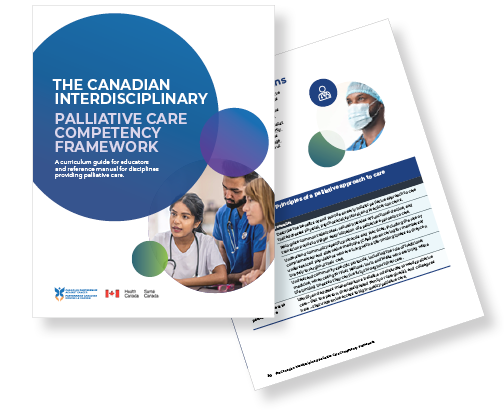
Things are moving in the right direction. The numbers in the latest CIHI report[1] were disappointing but encouraging at the same time. The direction of travel is right, but the quality and availability of care is still inconsistent. The Canadian Interdisciplinary Palliative Care Competency Framework is an opportunity to improve the proficiency of health teams. It will be important to hold everyone in the system to account so that patients can have a competent and compassionate team throughout the palliative period of their life.

[1]Canadian Institute for Health Information. Access to Palliative Care in Canada, 2023. Ottawa, ON: CIHI; 2023.

In 2022, only 40% of primary care physicians reported feeling prepared to care for patients with palliative care needs — this is similar to the proportion reported in 2019 (39%).

SOURCE: Canadian Institute for Health Information. Access to Palliative Care in Canada, 2023. Ottawa, ON: CIHI; 2023.

Paul Adams was the primary family caregiver to his wife, Suzanne Szukits, a Canadian diplomat, who was diagnosed with breast cancer in 2012 at the age of 52. She died of complications of metastatic breast cancer in September 2016. Since Suzanne’s death, Adams has written about palliative care in publications such as The WalrusThe Ottawa CitizenPolicy Options and Healthy Debate. He has served as a family representative on numerous advisory bodies on palliative and end-of-life issues, locally and nationally, and was an invited speaker at the International Palliative Care Congress in Montreal in 2022. He is currently co-chair of the Canadian Grief Alliance.

Adams is a former professor of journalism at Carleton University and a veteran of CBC Television, CBC Radio and the Globe and Mail, where he worked mostly as a political reporter. He is the author of several books. His first was Summer of the Heart: Saving Alexandre, the story of his son’s struggle with heart disease, which was short-listed for the Writers’ Trust biography prize. He also served for several years on the Journalism Oversight Committee of the Canadian Medical Association Journal.

This project has been made possible through a financial contribution from Health Canada. The views expressed herein do not necessarily represent the views of Health Canada.

Jeffrey Moat, Chief Executive Officer PALLIUM CANADA

This post is also available in: French