CAMPAIGNS

BUILDING WORKFORCE CAPACITY

A strong home and community care workforce is essential to ensuring Canadians can access timely, high-quality care in their homes and communities. However, workforce shortages, increasing demand, and recruitment and retention challenges continue to impact the delivery of care across the country. Through collaboration with health leaders, care providers, caregivers, and policymakers, the CHCA is working to identify and advance solutions that support workforce development, improve system performance, and strengthen the future of home and community care.

We are caregivers. We help Canadian families every single day. We are not numbers. We are human beings with hopes, dreams, and children who deserve stability.

There is a need for more compassionate, flexible policies that prevent people from falling out of status and provide clearer, more stable pathways forward.

The home care workforce, and in particular the PSW workforce, is already precarious due to lower wages than other segments of the healthcare sector. Reductions to the Temporary Foreign Worker program mean fewer new admissions each year, and fewer permit extensions for temporary residents currently working in home care in Canada. We have already lost and continue to lose skilled home care workers due to the increase in expired/expiring work permits. Immediately addressing this issue is essential to maintain status quo home care service levels, and absolutely vital to support a well-functioning healthcare system as Canada’s population ages and demand skyrockets.

I am a Personal Support Worker who has been providing care in the community, supporting clients in their homes with their daily needs. This work is deeply meaningful to me – not just a job, but a responsibility I take seriously. I have built relationships with my clients, and being part of their care and daily routines has been incredibly important to me. Unfortunately, due to the loss of my work authorization, I am no longer able to continue working in my role. This has been extremely difficult. What makes this situation even more difficult is knowing that there is a real need for workers in home care, yet many of us who are trained, experienced, and willing to work are unable to do so because of immigration delays and policy gaps.

I came to this job and in this sector because it was in demand but there is no point in getting a job where there is no job security.

I want to contribute to home and community care in Canada, but instead, I am stuck, unable to move forward, unable to support myself, and uncertain of what comes next.

If they can even make it easier for employers to extend the work permit of their employees, that too can help give us more time to fight for our PR. I know a lot of individuals in my community (those in community care settings) whose work permit is set to expire this May. I, and my family, are at the brink of losing our status, which means we have to stop working. I am hoping this message reaches the hearts of law makers.

Emotionally, it has also been challenging. Being removed from my clients without warning or closure has been hard. In home care, consistency matters. Clients rely on familiar faces and routines, and I worry about how these disruptions affect them as well. At this point, I am doing my best to remain hopeful, but the uncertainty is overwhelming at times. I truly want to continue contributing to the healthcare system and supporting those who depend on care in their homes.

I applied under the Home Care Worker Immigration Pilot launched on March 31, 2025, with hope for a stable future and the opportunity to contribute meaningfully to Canada’s care sector. However, recent immigration policy changes and uncertainties have left me in a very difficult and painful situation. At the moment, I am at a standstill. My work permit extension was denied, and I have fallen out of status. This has affected every part of my life: my ability to work, support my family, and maintain stability. It is deeply distressing to find myself in this position despite actively trying to follow the proper legal pathways. What makes this even harder is knowing that I am ready and willing to work in a sector that urgently needs people.

I have worked as a Caregiver with this family for almost 2 years since I submitted my application in April 2024. It was a roller coaster ride for me, especially dealing with financial struggles. I don’t know what to do anymore, I have financial obligations with my kids, and my mom is sick. I hope that the government will pay attention to this situation. The changes they made recently for the processing time and loss of possible status makes me feel hopeless. I hope they will see how valuable we are as a health worker to this community.

I sincerely hope that our experiences are taken into consideration and that meaningful steps are taken to restore work authorization for home care workers.

We are caregivers. We help Canadian families every single day. We are not numbers. We are human beings with hopes, dreams, and children who deserve stability.

I wish there was another pathway. Even in the express entry, I cannot create a profile under in-demand as teer 4, as it is not considered in-demand.

They should at least stop looking at people that work in the community like we don’t exist. If we all chose to work in long-term care who is going to take care of those in the community.

Quick Facts

Canada is already facing a national shortage of home support workers, caregivers, and related occupations, limiting domestic workforce capacity to meet rising demand for care at home. (ESDC, 2025)

Temporary Foreign Workers (TFWs) represent 7.9% of Canada’s home health care workforce — well above other health care sectors. (StatsCan, 2022)

Over 40% of newcomers (2016–2021) working in health were employed in nursing, residential care, or home health services. (IRCC, 2025)

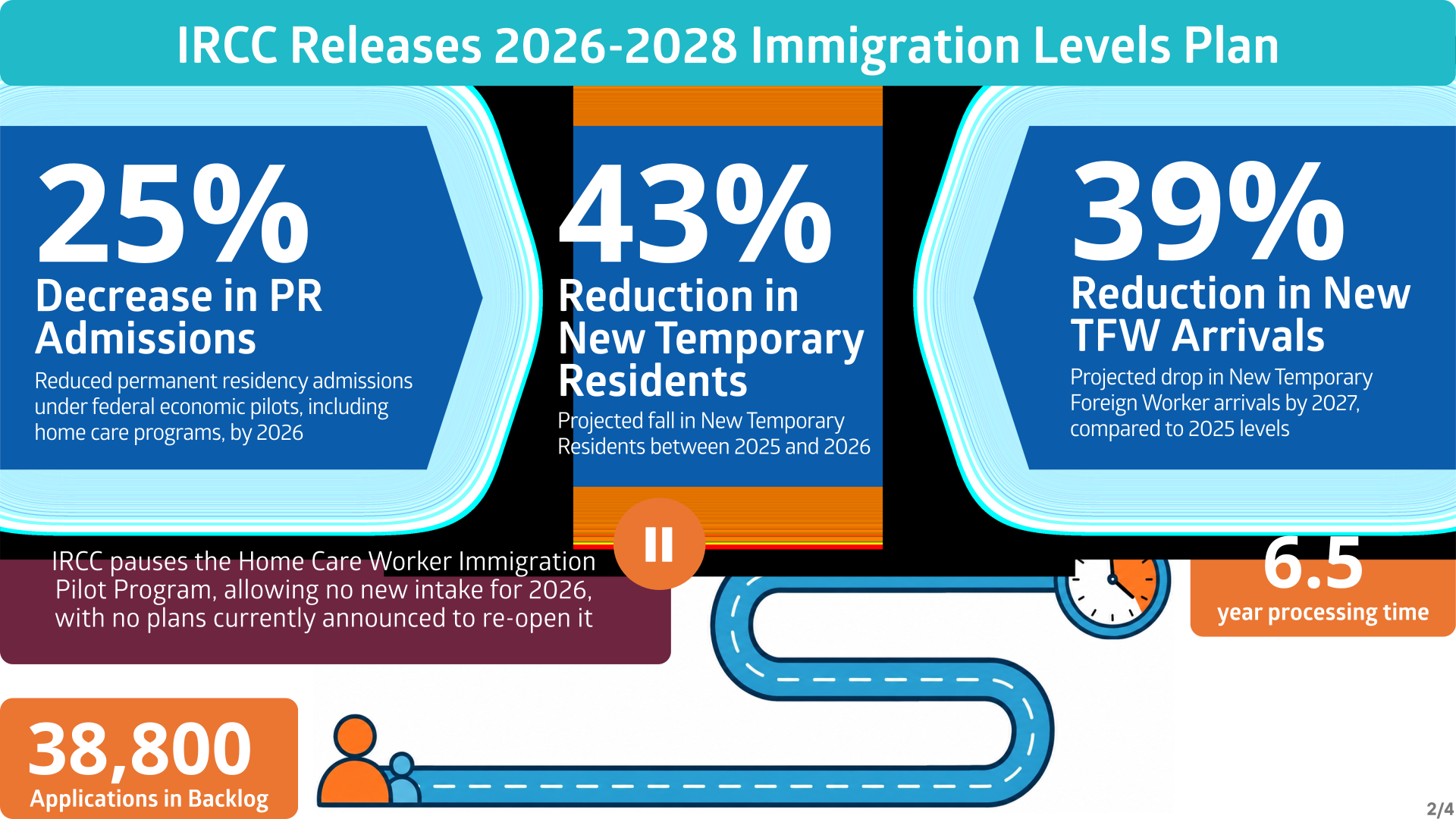
Recent immigration policy changes are projected to reduce new temporary residents by ~43% between 2025 and 2026. (IRCC, 2025)

Nearly 30% of healthcare workers surveyed in June reported that their visas are set to expire, putting them at risk of having to leave Canada. (SEIU Healthcare, 2026)

56% of caregivers say improving pathways to permanent residency for migrant care workers should be a priority. (CCCE, 2026)

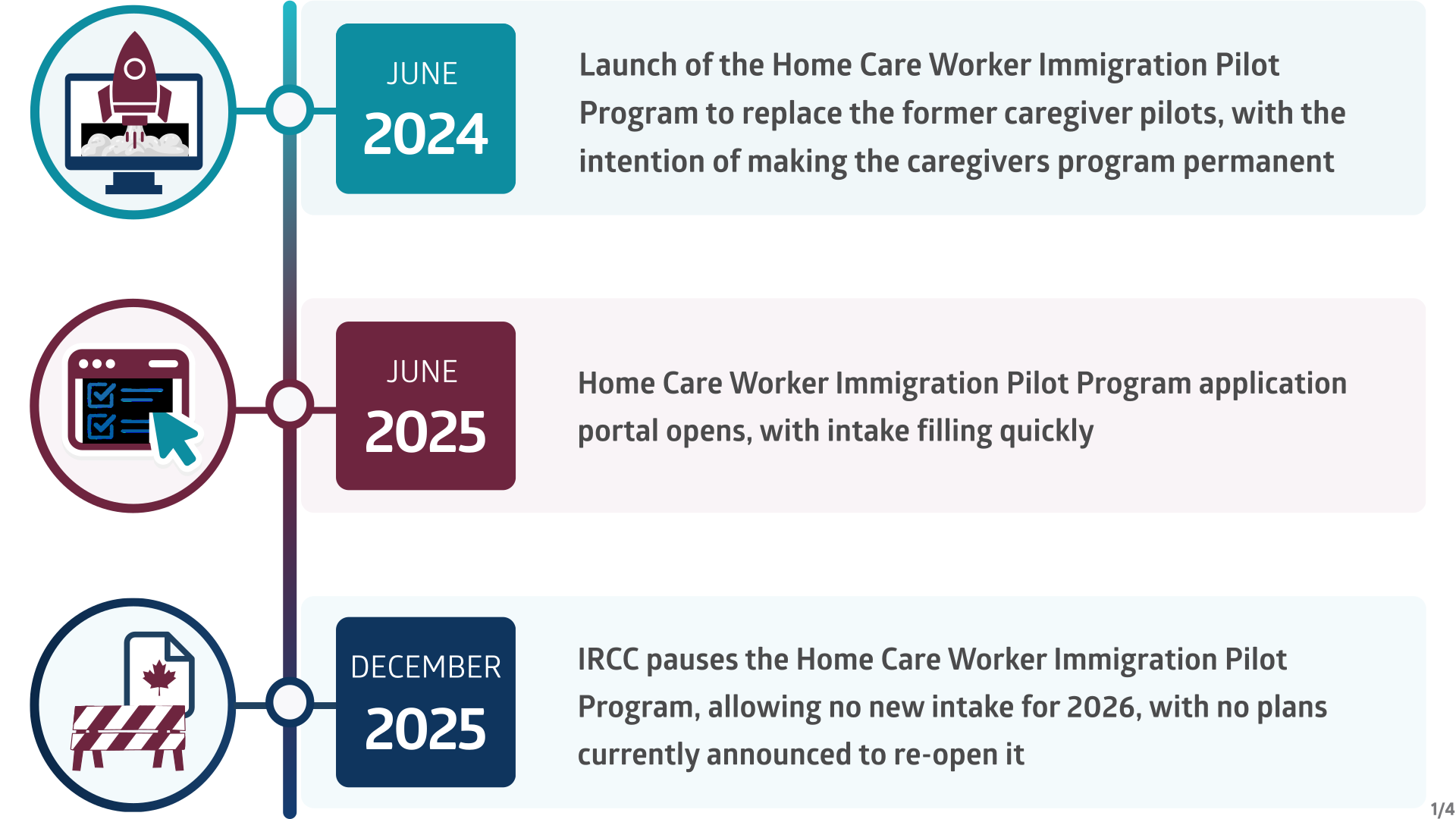
The closure of the Home Care Worker Immigration Pilot, combined with multi-year backlogs, is significantly limiting Permanent Residency pathways for essential home care workers.

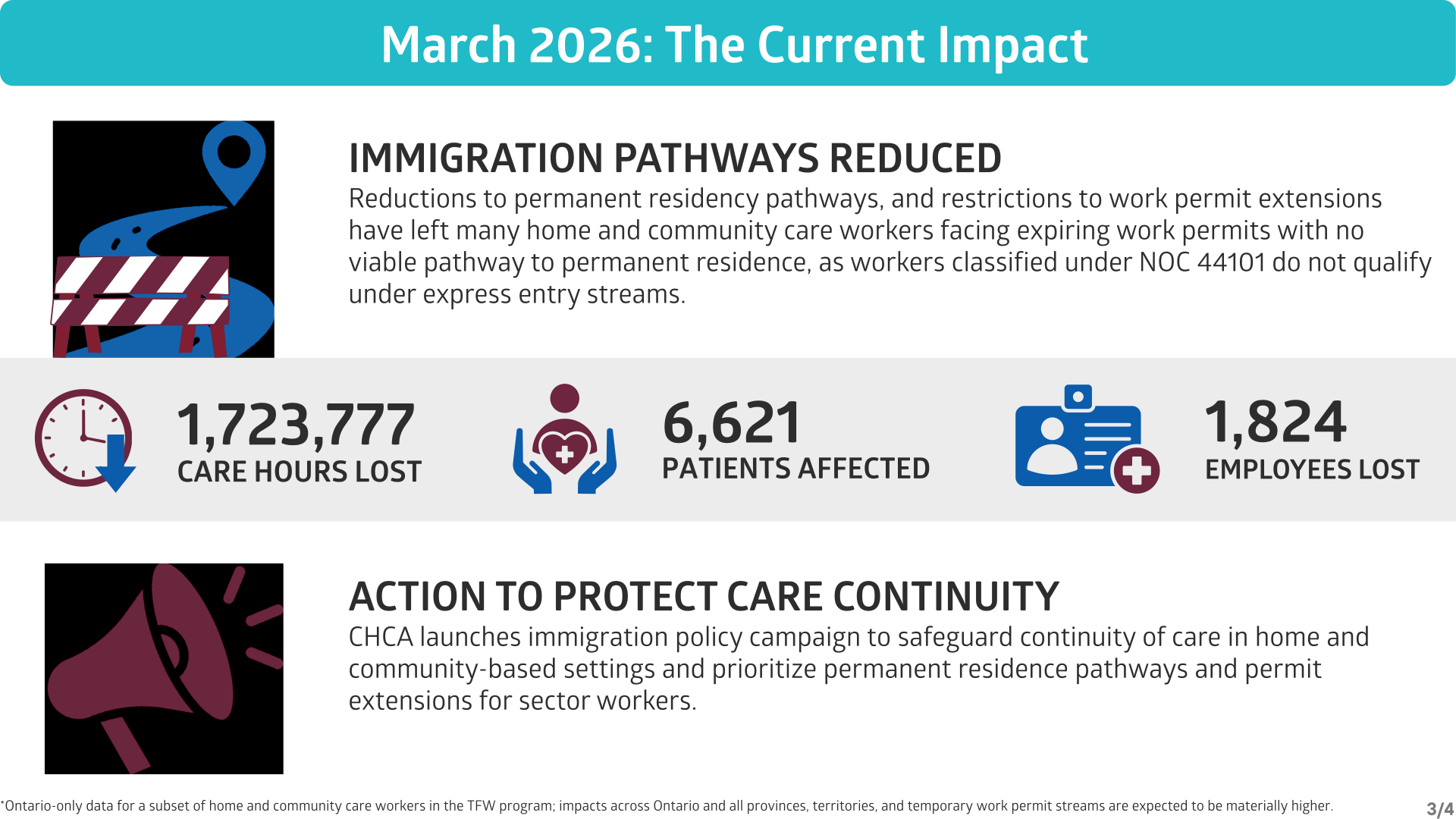
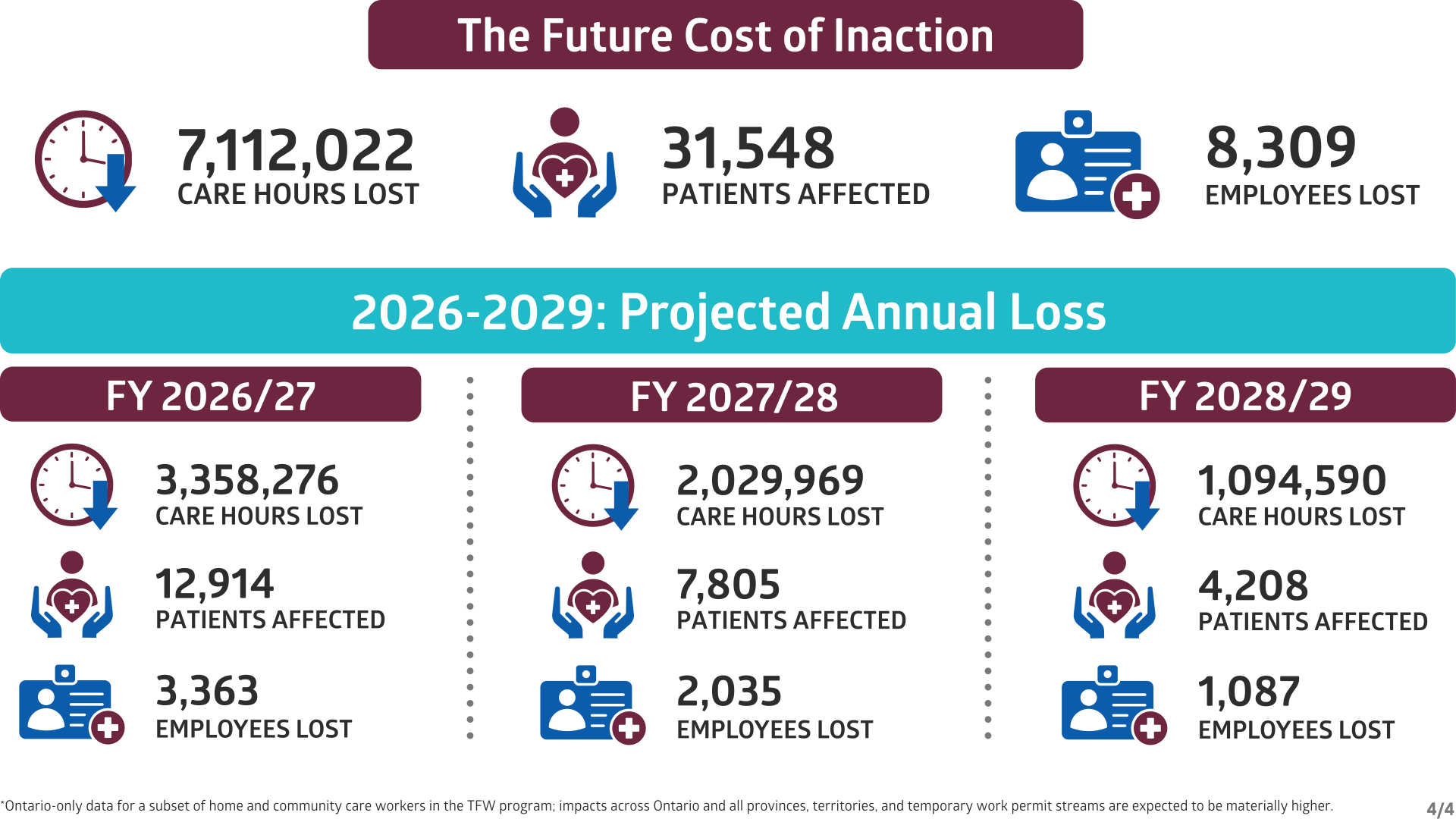
Without action, about 7 million home care visits delivered by over 8,000 TFWs could be at risk by 2029 in Ontario alone, disrupting care for more than 30,000 people. The actual impact is expected to be significantly higher nationwide.

A Nationwide Mobilization to Safeguard the Continuity of Care

The CHCA has launched a letter-writing campaign urging the federal government to protect and prioritize home and community care workers amid recent immigration policy changes. Canadians have responded overwhelmingly to this initiative. In the first three months of the campaign, over 1,000 Canadians have sent more than 10,000 letters to federal ministers responsible for home care and immigration, as well as to the Prime Minister’s Office and their local MPs.

With your continued support, we aim to reach 20,000 letters by the end of the summer.

The visual below shows letters submitted to date, as well as the regions across Canada where these impacts are being felt.

Pencil Pencil
1098 of 2000 actions taken

Immigration and Workforce Policy

Recent Immigration, Refugees and Citizenship Canada (IRCC) policy changes aimed at reducing temporary residents are creating challenges for home and community care workforce stability. Increased barriers to work permit extensions and permanent residency pathways are limiting access to a critical workforce at a time when domestic shortages continue to grow. Better alignment between immigration policy and health workforce planning is needed to ensure Canada can meet rising care demands.

While these changes are affecting many sectors, the impact on health care is unique. Home care is a high-demand sector that relies heavily on internationally trained workers to support Canadians’ health, independence, and quality of life. A significant reduction in this workforce would limit access to care, increase pressure on hospitals, and place additional strain on caregivers.

This policy brief, released in March 2025, examines the impact of recent IRCC policy changes on home and community care workforce stability, analyzing Temporary Foreign Worker program restrictions, permanent residency pathway limitations, projected workforce shortages, and system-level consequences — including impacts on patients, caregivers, the health system, and the economy — while outlining recommended federal actions to protect care capacity.

Download our policy brief

Workforce Sustainability

Canada’s home and community care workforce is under sustained national strain, with projections indicating continued shortages through 2033. As Canada transitions into a super-aged society, demand for home and community-based care is expected to rise faster than the system’s ability to train, recruit, and retain workers domestically.

At the same time, workforce instability is already affecting service continuity. Insufficient staffing is contributing to increased pressure on hospitals and long-term care systems, reduced access to community-based care, and rising public costs associated with delivering care in more acute settings.

This is not a short-term recruitment gap – it is a structural imbalance between demand and supply.

Workforce optimization must therefore include both strengthening domestic pipelines and maintaining access to international recruitment pathways that currently play a critical role in sustaining service delivery. Constraining one lever without addressing the other risks shifting pressure onto hospitals and long-term care without resolving underlying capacity constraints.

A coordinated “home-first” strategy requires sustained investment in both workforce development and system capacity to ensure care can be delivered where it is most preferred: in the home and community.


Policy Timeline and System Impacts

The timeline presents key workforce and immigration policy changes from 2024–2026 and projects their downstream impacts on home and community care capacity, workforce stability, and service delivery through 2029 based on current policy trajectories.

Take Action

This page is updated regularly as new information, campaign developments, and testimonials become available. We encourage you to check back often for the latest updates and opportunities to get involved.

Behind workforce data and policy are people – care workers, caregivers, and the individuals who rely on them every day. Take action to share your experiences, support this priority, and help strengthen home and community care in Canada.

Lived Experiences

We invited people to share how recent changes to immigration policy are affecting their lives and work. The strong response from our community has made clear the far-reaching impact of these changes. Below, care workers, caregivers, and health leaders share stories and testimonials about how these policies are affecting them, their families, the people they care for, and the broader health system.

We are caregivers. We help Canadian families every single day. We are not numbers. We are human beings with hopes, dreams, and children who deserve stability.

There is a need for more compassionate, flexible policies that prevent people from falling out of status and provide clearer, more stable pathways forward.

The home care workforce, and in particular the PSW workforce, is already precarious due to lower wages than other segments of the healthcare sector. Reductions to the Temporary Foreign Worker program mean fewer new admissions each year, and fewer permit extensions for temporary residents currently working in home care in Canada. We have already lost and continue to lose skilled home care workers due to the increase in expired/expiring work permits. Immediately addressing this issue is essential to maintain status quo home care service levels, and absolutely vital to support a well-functioning healthcare system as Canada’s population ages and demand skyrockets.

I am a Personal Support Worker who has been providing care in the community, supporting clients in their homes with their daily needs. This work is deeply meaningful to me – not just a job, but a responsibility I take seriously. I have built relationships with my clients, and being part of their care and daily routines has been incredibly important to me. Unfortunately, due to the loss of my work authorization, I am no longer able to continue working in my role. This has been extremely difficult. What makes this situation even more difficult is knowing that there is a real need for workers in home care, yet many of us who are trained, experienced, and willing to work are unable to do so because of immigration delays and policy gaps.

I came to this job and in this sector because it was in demand but there is no point in getting a job where there is no job security.

I want to contribute to home and community care in Canada, but instead, I am stuck, unable to move forward, unable to support myself, and uncertain of what comes next.

If they can even make it easier for employers to extend the work permit of their employees, that too can help give us more time to fight for our PR. I know a lot of individuals in my community (those in community care settings) whose work permit is set to expire this May. I, and my family, are at the brink of losing our status, which means we have to stop working. I am hoping this message reaches the hearts of law makers.

Emotionally, it has also been challenging. Being removed from my clients without warning or closure has been hard. In home care, consistency matters. Clients rely on familiar faces and routines, and I worry about how these disruptions affect them as well. At this point, I am doing my best to remain hopeful, but the uncertainty is overwhelming at times. I truly want to continue contributing to the healthcare system and supporting those who depend on care in their homes.

I applied under the Home Care Worker Immigration Pilot launched on March 31, 2025, with hope for a stable future and the opportunity to contribute meaningfully to Canada’s care sector. However, recent immigration policy changes and uncertainties have left me in a very difficult and painful situation. At the moment, I am at a standstill. My work permit extension was denied, and I have fallen out of status. This has affected every part of my life: my ability to work, support my family, and maintain stability. It is deeply distressing to find myself in this position despite actively trying to follow the proper legal pathways. What makes this even harder is knowing that I am ready and willing to work in a sector that urgently needs people.

I have worked as a Caregiver with this family for almost 2 years since I submitted my application in April 2024. It was a roller coaster ride for me, especially dealing with financial struggles. I don’t know what to do anymore, I have financial obligations with my kids, and my mom is sick. I hope that the government will pay attention to this situation. The changes they made recently for the processing time and loss of possible status makes me feel hopeless. I hope they will see how valuable we are as a health worker to this community.

I sincerely hope that our experiences are taken into consideration and that meaningful steps are taken to restore work authorization for home care workers.

We are caregivers. We help Canadian families every single day. We are not numbers. We are human beings with hopes, dreams, and children who deserve stability.

I wish there was another pathway. Even in the express entry, I cannot create a profile under in-demand as teer 4, as it is not considered in-demand.

They should at least stop looking at people that work in the community like we don’t exist. If we all chose to work in long-term care who is going to take care of those in the community.

This page is updated regularly as new information, campaign developments, and testimonials become available. We encourage you to check back often for the latest updates and opportunities to get involved.

This post is also available in: French