“The Competency Framework holds us accountable to meet those higher standards in delivering quality end-of-life care or quality palliative care that is culturally and socially safe. We really value being able to provide person-centred, high-quality palliative care.”

Laurel Gillespie, Chief Executive Officer
CANADIAN HOSPICE PALLIATIVE CARE ASSOCIATION

“The Competency Framework holds us accountable to meet those higher standards in delivering quality end-of-life care or quality palliative care that is culturally and socially safe. We really value being able to provide person-centred, high-quality palliative care.”

Laurel Gillespie, Chief Executive Officer
CANADIAN HOSPICE PALLIATIVE CARE ASSOCIATION

The Importance of Competency Framework Knowledge Sharing for Caregivers and Patients

The Canadian Hospice Palliative Care Association Believes that Using the Competency Framework to Standardize Knowledge Will Lead to Higher Quality Palliative Care

The Canadian Hospice Palliative Care Association (CHPCA) understands that individuals who need end-of-life care would much prefer to remain at home, in familiar surroundings, rather than spend their remaining time in a hospital or a residential care home. The CHPCA also believes these individuals deserve and should expect the same quality of care whether they are at home or in a health care facility.

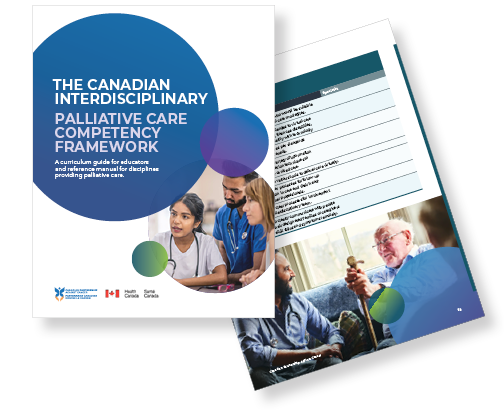
To ensure those in need get the care they deserve, the CHPCA focuses on education, awareness and knowledge translation—and the Canadian Interdisciplinary Palliative Care Competency Framework (Competency Framework) helps standardize this information. The CHPCA uses the Competency Framework to develop programs to educate health care providers.  Programs that help the team provided competent, compassionate, interdisciplinary, and palliative approaches to care.

Additionally, through their online palliative care education program PACE for PSWs, the CHPCA offers a comprehensive 10-course program to help PSWs provide compassionate, competent, confident palliative care. The competencies were woven throughout the courses during development. PACE for PSWs is available in both French and English.

The CHPCA sees the use of the Competency Framework as a way forward in the standardization of palliative care, leading to better health care delivery, empowerment of health care providers and better support for those needing care.


Despite the fact that most Canadians would prefer to die at home and that only a small proportion need intense tertiary care in the last days or weeks of life, most (67%) still die in hospital.

Established in 1991, the Canadian Hospice Palliative Care Association is the national voice for hospice palliative care in Canada. The CHPCA advocates for advancing the quality of end-of-life/hospice palliative care in Canada by supporting research, public policy, public education and awareness.

This project has been made possible through a financial contribution from Health Canada. The views expressed herein do not necessarily represent the views of Health Canada.

Jeffrey Moat, Chief Executive Officer PALLIUM CANADA

This post is also available in: French