Home care is not well-defined, but almost everyone expresses a desire to die at home with the support of a home care team. In December 2017, Bill C-277, the Framework on Palliative Care in Canada Act, received royal assent. The goal of the Act is to improve access to palliative care, including care at home.
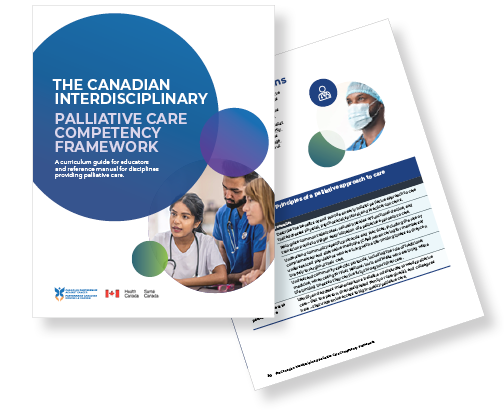
The definition of “home care” varies across Canada. This type of care is unique because each family and home context is different and must be accomodated. The Competency Framework is essential as the unifying basis for enabling consistent palliative care—not only in the home, but across all settings. The palliative care competencies provide deeper clarity for care providers working in the home and complement the broader clinician-based proficiencies.
The Competency Framework helps shine a light on the importance of palliative care and validates the care team’s approach in the home. This is particularly important at a time when other system pressures risk de-prioritizing time for people with palliative needs. The competencies across the 12 domains reinforce the importance of relationship-based care, along with continuity of service and staff. They also validate our soon-to-be-published research about nurses’ concerns about not being able to provide care that is consistent with palliative principles and philosophies.
Despite these concerns, there is optimism. Everyone in the system wants to do a good job. Home care staff are creative and find ways to support people, including those who face deep inequities. They team up with shelter workers and support housing staff, for example, to assist in advance care planning and to provide palliative support. The Competency Framework strengthens that collaboration through a shared understanding of expectations and roles.
Ultimately, the Framework can be used for advocacy for better palliative care at home and will guide future research work.


 “The competencies will lead to integrated care and will help everybody in the system do a good job, giving patients and families a good experience.”