“The Competency Framework is the next step for ‘getting it right’ in Canada. It serves as a reference and makes it easier to build a team where members understand and support each other’s roles.”

Dr. Cathy Faulds, Palliative Care Physician
St. Joseph’s Health Centre

“The Competency Framework is the next step for ‘getting it right’ in Canada. It serves as a reference and makes it easier to build a team where members understand and support each other’s roles.”

Dr. Cathy Faulds, Palliative Care Physician
St. Joseph’s Health Centre

The Competency Framework Helps Build Competent Teams

A step in the right direction

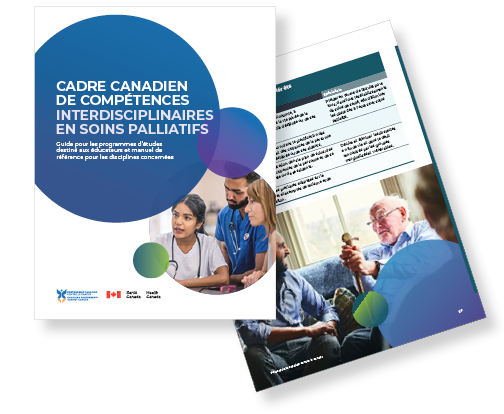
There have been unclear and varied definitions of palliative care over the course of my four-decade career as a physician. The Canadian Interdisciplinary Palliative Care Competency Framework is an epic accomplishment. It provides the opportunity for collective advocacy, public awareness and consistent education across health disciplines, while ending ad hoc, instinctive palliative programs and care. I wish I had the Competency Framework when I was leading the development of a palliative care unit 20 years ago.

Importantly, the Framework spells out the competencies by discipline for both generalists and specialists. Death is not a disease, and most people die without a specialist. Anyone working in the health care profession needs to be comfortable with someone dying. This document helps leaders know how to mentor those who are not prepared.

In health care, clinicians are typically rewarded for technical skills. But to have the emotional maturity and the ability to have crucial, empathetic conversations about advanced care planning is difficult. It is a learned skill, and the Competency Framework pays attention to that. So, while it doesn’t create a tactical road map, the Framework readies individuals and teams to build their aptitude in palliative care. It encourages practitioners to use an ethical perspective when thinking about how they should “be” in the moment and to think about their competencies and the areas they want to develop in an intentional and meaningful way. It also provides an effective way for leaders and mentors to work with students who typically have not been exposed to dying and do not know how to conduct themselves.

Applying the Framework can help busy home care providers function effectively within the team, enabling a tight, cohesive care unit. Knowing that team members are using the Competency Framework creates a level of confidence and comfort that skilled, knowledgeable individuals are in place. Taking the time to educate staff with the Competency Framework can reap benefits such as fewer calls for clarification, less time coordinating care and decreased use of unnecessary resources—emergency care, paramedic calls, additional home visits and more. Ultimately, it improves the quality of care for the patient and family.

Although 90% of medical curricula have lectures related to palliative care, there is little mentorship and just 12% of students were required to participate in mandatory clinical rotations in palliative care.

SOURCE: Canadian Institute for Health Information (CIHI). Access to Palliative Care in Canada. Ottawa, Ontario: 2018, p35, Retrieved on Jun 8, 2023 from https://www.cihi.ca/sites/default/files/document/access-palliative-care-2018-en-web.pdf

Dr. Cathy Faulds received her certification in Family Medicine from the College of Family Physicians of Canada (CFPC) in 1989, and became a Fellow in 2004. She completed her Certificate of Added Competence in Palliative Care from the CFPC in 2016 and her American Board of Palliative and Hospice Medicine in 2010.

Currently, Dr. Faulds serves as a palliative care physician with St. Joseph’s Health Centre and is a staff family physician at London Health Sciences Centre. Since 1996, she has served as a clinical professor and mentor to undergraduate and graduate medical students at Western University. She is currently on Faculty of CPEP where she teaches ethical remediation. Dr. Faulds is also the Chair of the Ontario Medical Association and the ARGI.inc Board of Directors. She has participated on the Board of the Ontario College of Family Physicians (OCFP) serving as Secretary-Treasurer, President-Elect, and President from 2011-2015. She concluded her term as Past-President in November 2016. She has served as a Director of the College of Family Physicians of Canada from 2013-17, Thames Valley Board of Research and The University of Western ON Foundation Board.

This project has been made possible through a financial contribution from Health Canada. The views expressed herein do not necessarily represent the views of Health Canada.

Jeffrey Moat, Chief Executive Officer PALLIUM CANADA

This post is also available in: French