Supporting Conversations about Safety and Independence
Client safety in home and community care begins with understanding the person whose home we are entering. A home holds familiar routines, relationships, identity, independence and autonomy. Care must help prevent avoidable harm while respecting what gives that person’s life meaning. Self-determination, including an informed choice to live with some risk, belongs at the centre of that work.
This year, during patient safety week, The Canadian Home Care Association’s (CHCA) is revisiting work we have done on patient safety and highlighting resources that are useful for home care recipients, providers, and unpaid caregivers.
CHCA’s Safety at Home Roadmap report highlights a recurring challenge: people receiving care, family caregivers and the health care team may have different views of what is safe. It calls for shared understanding, accessible information and integrated care. These priorities require an approach that respects the person’s decisions while addressing the safety needs of caregivers and providers.
Developed by CHCA and the Canadian Patient Safety Institute (now a program of Healthcare Excellence Canada), the Am I Safe? Integrated Care Model, places patients and their families at the focal point, supported by home care, primary care and acute care discharge teams. Its three questions guide a continuous process: “Am I safe?” explores current safety; “How can I be safe?” considers options; and “Am I safer?” reviews the effects of agreed strategies. The person remains central as circumstances change and care moves between settings.
The environmental scan described in the Am I Safe? report identified an important gap. Although risk assessments were routine, awareness, availability and use of guides for difficult safety conversations were limited. An assessment can identify a concern; a conversation helps explain what the person is willing to change, what they value and what they fear losing.
Within this model, self-determination has practical meaning. People need understandable information about potential harm and available options, along with opportunities to ask questions and express preferences. They may place greater value on independence, familiar routines or remaining at home than on eliminating every possible risk. An informed choice to accept some risk should shape care planning, with ongoing support and opportunities to reconsider.
For example, someone may want to continue preparing their own meals despite concerns about their balance. A safety conversation can explore why cooking matters to them and what changes they would consider. Together, the person and care team can identify ways to reduce harm while preserving a valued activity.
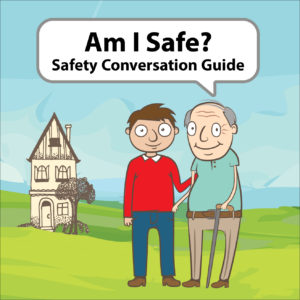
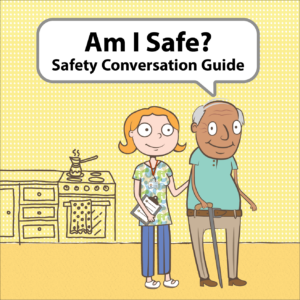
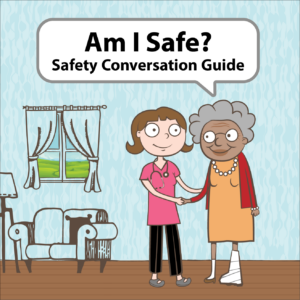
The Am I Safe? Conversation Guides build on this report and helps put this approach into practice.
S.A.F.E. supports regulated providers to:
- Share assessment findings,
- Ask about the person’s perspective,
- Facilitate informed decisions and
- Evaluate progress.
C.A.R.E. guides personal support workers and other unregulated providers to
- Carefully observe,
- Ask questions,
- Report concerns and
- Encourage safety.
A.C.T. helps patients and caregivers
- Ask questions,
- Communicate what matters to them and
- Take an active role in their safety.
Each guide makes conversations about safety part of everyday care.
Provider safety belongs in these discussions too. Respect for personal choice sits alongside responsibilities to identify concerns, work within professional roles and protect workers. Clear documentation, communication and escalation help teams respond when needs or risks change. Organizations must provide the training and coordinated support that make these responsibilities achievable. This year, CHCA’s Project ECHO Personal Support Workers stream focuses on safety and risk mitigation for PSWs.
Read the Am I Safe? Integrated Care Model, Conversation Guides and Safety at Home Roadmap roundtable report.