


• Michelle Demille

    Senior Director of Transformation, ParaMed

    Mar 23, 2023
    Read time = 3 minutes

Technology Impact Personally: The cloud which enables access from anywhere and the opportunity for anyone to be an “off the desk” developer

Lessons from beyond home care

Laying the foundation to take care to the next level

Home care is all about people –connecting those in need with the essential supports they deserve, in their communities where they feel most comfortable. Lately, good people have spent too much time correcting and managing administrative tasks – payroll, invoices, or schedules, often in bulky Excel spreadsheets. Canada’s health care system has slowly begun to ‘axe the fax’ by not just literally removing fax machines from doctors’ offices, but by giving the entire system an IT overhaul. In home care, we are doing our part as well. By investing in best-in-class IT software and other digital support tools, our goal is to make it easier for team members to do what they do best – providing compassionate, high-quality home health care services – so they have more time to focus on the people who rely on them.

Establishing an integrated infrastructure

At ParaMed, we have invested in Workday, [i] an industry-leading employee experience support platform, to help us to integrate payroll, finance, and human resources tasks, and simplify and improve our back-office systems. All team members, from frontline staff to administrative personnel, will be able to quickly complete tasks such as requesting vacation, applying for internal job opportunities, viewing important personal documents such as paystubs, and quickly identifying the right collaborators to answer questions. The integrated data structure of Workday will let us improve our ability to retrieve and analyze our information and use those metrics to adapt processes to better respond to our teams’ needs and achieve organizational goals.

Imagine the day when the recruitment and onboarding process is seamless, where all forms and orientation materials are in one place accessible to the entire team – from HR to the local branch office, to our newest team members. This investment in world-class technology infrastructure and systems that will enable our team members to spend more time on care.

Improving communication

In tandem with Workday, we have replaced traditional telephones with Voice over Internet Protocol (VoIP), technology that enables smoother communication via voice, fax, and text, using the internet instead of telephone systems. Day-to-day challenges to the conditions facing any team (such as weather and travel complications, falling ill) necessitate flexibility in how and where we work, and the ability to easily access records regardless of where we are, has strengthened the resilience of our communications foundation.

Remembering the fundamentals

In the past year, we’ve made accessing different tools for different tasks easier. We’ve heard from our teams that signing into each tool individually – for example, email, clinical documentation, policies, IT and HR support – takes time away from care. In response, we implemented single sign-on (SSO) and multifactor authentication (MFA) so that team members’ user experience is improved, by authenticating their identity once, and gaining access to multiple tools. MFA provides an added layer of cybersecurity to keep information protected. With a personal email account, employees can get important and relevant company information directly, at a time that is convenient for them.

We have also made it easier to access IT support, with self-service online tools – cutting out the time previously spent in the queue to speak with a live IT Helpdesk agent.

What’s next?

The future of home health care across Canada, and the patients and dedicated caregivers who partner together within it, deserve far more than improvements to outdated processes. As pandemic recovery continues to take shape in the broader health system around us, enhancing quality of care and improving patient experiences must be at the forefront of any actions taken by providers, health partners and governments alike.

Major investments like these, overhauling the systems our team members rely on and improving the foundations that support them, is an essential tool in the toolbox as we work together to build a stronger home health care system, both now and in the future.

ABOUT THE INITIATIVE

In response to the trends impacting the labour market, the Canadian Home Care Association (CHCA) has launched an initiative to share ideas on how to design, establish and maintain great workplaces where employees are valued, respected, and nurtured. The current campaign, launched in September 2022, features the technology factor, and explores the impact and potential of technology in home care today and in the future. The discussions and campaign content will feature research evidence, lived experiences and opinion leaders’ thoughts on how technology is shaping the future workplaces in home and community care across the country.

  • Michelle Demille

    Senior Director of Transformation, ParaMed

    Read time = 3 minutes

Technology Impact Personally: The cloud which enables access from anywhere and the opportunity for anyone to be an “off the desk” developer

Lessons from beyond home care

Laying the foundation to take care to the next level

Home care is all about people –connecting those in need with the essential supports they deserve, in their communities where they feel most comfortable. Lately, good people have spent too much time correcting and managing administrative tasks – payroll, invoices, or schedules, often in bulky Excel spreadsheets. Canada’s health care system has slowly begun to ‘axe the fax’ by not just literally removing fax machines from doctors’ offices, but by giving the entire system an IT overhaul. In home care, we are doing our part as well. By investing in best-in-class IT software and other digital support tools, our goal is to make it easier for team members to do what they do best – providing compassionate, high-quality home health care services – so they have more time to focus on the people who rely on them.

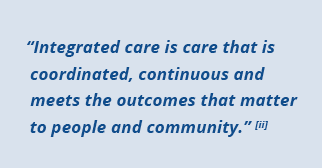
The potential of technology is a key enabler to integrated care.  It allows for better and real time communication and can support meaningful sharing of knowledge and decision-making between members of the health care team, including the patient and their circle of care. Digital solutions, such as remote monitoring, wearables, information communication technologies, and functional aids, along with new advancements in machine learning and artificial intelligence, can allow for more care to be provided in the community.  Whether in a facility or at home, technology is not necessarily the driver but an enabler; operating seamlessly (or even invisibly) to support care delivery, communication, and collaboration.  Digital solutions are effectively “the cement that holds [integrated care] together.”[i]

Clinicians have had to quickly adapt to deliver care virtually which shifts how they build and maintain relationships. The entrenched bedside manner in a room with a physical person will increasingly be replaced with remote home care.  Education and skill development on remote communication and effectively relating to each other with compassion in a virtual space are essential to ensure this transformation comes along with improved patient and provider outcomes and experience. With the rapid evolution of technology, this is likely to be an ongoing program of education coupled with continuing education on how to work in an ever-changing environment.

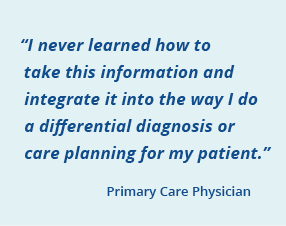
Support for clinicians to develop the skills for working within and through digital technologies is lacking across health disciplines.[iii] There is a tendency to expect users to transfer their clinical approach to the technology and to undervalue the need for new skills in academic and care settings. Research shows significant gaps across health disciplines in the preparedness for, and comfort with, digital health. [iv], [v]  There are also inaccurate assumptions about age as a predictor of openness to technology.[vi] Instead, technology acceptance may be more about personality and training, with some people at any age being more reticent to adopt technology.  For example, physician students in one study showed interest primarily in digital diagnostics and technology to support better communication and did not appreciate the potential of or feel adequately prepared for adopting new digital technologies.[vii],[viii],[ix]


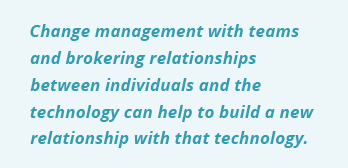
Reticence may also be linked to a sense of mastery and identity.  Technology can be the proverbial “straw that breaks…”; it can be a threat if it makes one feel inadequate or redundant or takes away what they love about their job.  Change management with teams and brokering relationships between individuals and the technology can help to build a new relationship with that technology.  Considering technology as one of the team members, the goal becomes making the most of that member by working it to its full scope of practice. At the end of the day, if the technology is meaningful and valuable to the person and the team, they are more willing to put the effort into using it.[x]

The opportunity to realize the sense of accomplishing well-orchestrated, effective, and comprehensive care is what motivates clinicians. If there’s no “sense-making” to the technology and no value attached to it, it may just become busy work and is de-motivating.

Breeding a learning culture and an adaptation mindset enables easier scale and spread to similar platforms. As new technologies emerge, continuing education can be nuanced to address changes in the nature of the workflow, changes in roles and responsibilities of teams and patients, and changes in how we build and maintain relationships in health care. For individuals, curiosity, adaptability, and willingness to learn, with organizations providing enabling environments may help the workforce to thrive in a future digitally enabled system.

References

[i] International Foundation for Integrated Care. Nine Pillars of Integrated Care. Retrieved Oct 31, 2022, from https://integratedcarefoundation.org/nine-pillars-of-integrated-care#1589446997093-e458b4d0-6308

[ii] Lennox-Chhugani, N. International Foundation for Integrated Care. Nine Pillars of Integrated Care. Video. Retrieved Oct 31, 2022, from  https://vimeo.com/641081478

[iii] Nes A, Steindal S A, Larsen M H, Heer H C, Lærum-Onsager E, Gjevjon E R. Technological literacy in nursing education: A scoping review, Journal of Professional Nursing, Volume 37, Issue 2, 2021, Pages 320-334, ISSN 8755-7223, https://doi.org/10.1016/j.profnurs.2021.01.008.

[iv] Kleib M, Nagle LM, Furlong KE, Paul P, Wisnesky UD, Ali S. Are future nurses ready for digital health? Informatics competency baseline assessment. Nurse Educ. 2022;47(5):E98-E104. doi: 10.1097/NNE.0000000000001199

[v] Baumgartner M, Sauer C, Blagec K, Dorffner G. Digital health understanding and preparedness of medical students: a cross-sectional study. Med Educ Online. 2022 Dec;27(1):2114851. doi: 10.1080/10872981.2022.2114851. PMID: 36036219; PMCID: PMC9423824.

[vi] Tudor Car L, Kyaw B, Nannan Panday R, van der Kleij R, Chavannes N, Majeed A, Car J. Digital Health Training Programs for Medical Students: Scoping Review, JMIR Med Educ 2021;7(3):e28275 https://mededu.jmir.org/2021/3/e28275 DOI: 10.2196/28275

[vii] Baumgartner M, Sauer C, Blagec K, Dorffner G. Digital health understanding and preparedness of medical students: a cross-sectional study. Med Educ Online. 2022 Dec;27(1):2114851. doi: 10.1080/10872981.2022.2114851. PMID: 36036219; PMCID: PMC9423824.

[viii] Medicine Stanford. (2020). Stanford Medicine 2020 Health Trend Report: The Rise of Data-Driven Physician. https://med.stanford.edu/content/dam/sm/school/documents/Health-Trends Report/Stanford%20Medicine%20Health%20Trends%20Report%202020.pdf.

ix] Kleib M, Nagle LM, Furlong KE, Paul P, Wisnesky UD, Ali S. Are future nurses ready for digital health? Informatics competency baseline assessment. Nurse Educ. 2022;47(5):E98-E104. doi: 10.1097/NNE.0000000000001199

[x] Steele Gray C. Seeking Meaningful Innovation: Lessons Learned Developing, Evaluating, and Implementing the Electronic Patient-Reported Outcome Tool J Med Internet Res 2020;22(7):e17987 https://www.jmir.org/2020/7/e17987 DOI: 10.2196/17987

ABOUT THE INITIATIVE

In response to the trends impacting the labour market, the Canadian Home Care Association (CHCA) has launched an initiative to share ideas on how to design, establish and maintain great workplaces where employees are valued, respected, and nurtured. The current campaign, launched in September 2022, features the technology factor, and explores the impact and potential of technology in home care today and in the future. The discussions and campaign content will feature research evidence, lived experiences and opinion leaders’ thoughts on how technology is shaping the future workplaces in home and community care across the country.