This blog describes another component of the multi-phase research project initiated in 2016 and described in the blog dated February 3, 2022[i]. In this study, the impacts on carer-employees’ (CE) workplace experiences after an educational intervention were assessed.
Carer-employees experience mental and physical stress and are economically impacted by time and space constraints between caregiving, work, and nonwork. CEs may incur caregiving costs across five domains:
- lost income
- reduced future earning potential
- reduced employment benefits
- out of pocket caregiving expenses
- and unpaid labor.[ii]
Employers are also impacted by the stress of their CEs, in the form of reduced productivity, poor employee morale, employee turnover, and higher overall stress.[iii] Other reported consequences include taking leaves from work; reducing work hours; being denied employment, and quitting.[iv] Consequently, workplaces have incentive to support their CEs, who are often highly skilled in industry-specific knowledge, at the peak of their careers, and in senior positions.
The sample size at the end of the two-year web-based educational intervention study consisted of 21 participants. Data was collected on outcome variables such as work-role function, work-family conflict, supervisor support and co-worker support, both before and after the intervention. Seven different scales were used to assess aspects of workplace experience: 1) work role function; 2) job satisfaction; 3) scheduling control; 4) work-to-family conflict; 5) family-to-work conflict; 6) family supportive supervisor behavior, and 7) co-worker support.
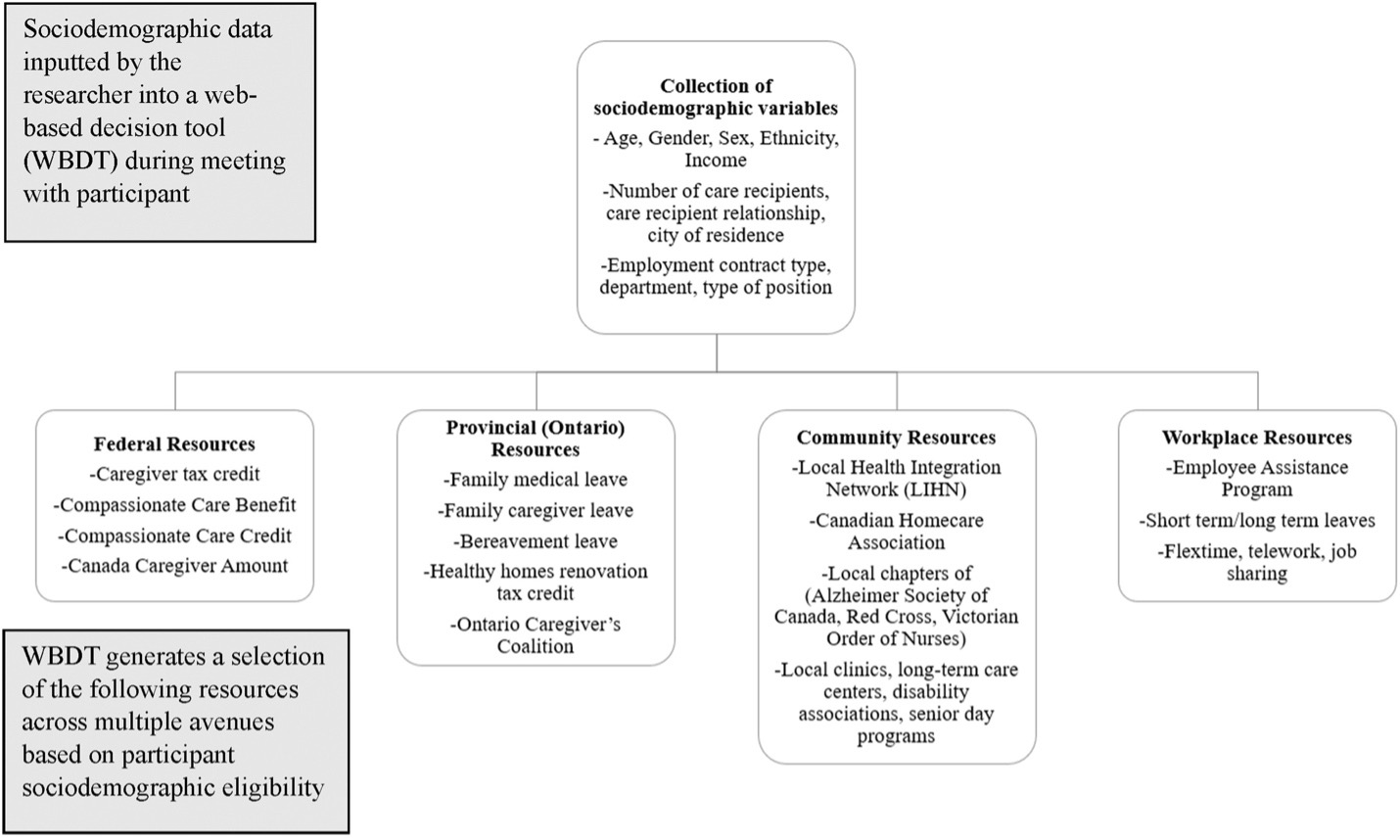
The intervention session was an in-person meeting conducted individually with each participant. Once demographic and carer-specific information were submitted into the web-based decision tool (WBDT), the tool highlighted information and resources for carers at the federal, provincial, community, and workplace level, to equip them with the necessary information to best manage their own balance between work and caregiving roles (see figure below).
Overall, intervention participants reported less work family conflict, better supervisory and co-worker support. The findings provide meaningful evidence for the effectiveness of educational interventions aimed at improving the work experience for CEs, particularly soon after the delivery of the intervention
The findings suggest the need for regularly scheduled educational sessions. Further research may need to be conducted to assess generalizability of our findings across different workplaces and sectors.
Learn more from the published paper.