Project ECHO
Personal Care Providers
All Teach, All Learn
Building Skills, Knowledge, and Confidence


All Teach, All Learn
Building Skills, Knowledge, and Confidence
Personal care providers are essential healthcare team members who deliver personal care and support to individuals receiving home care. This Project ECHO stream reinforces national standards and best practices outlined in the National Occupational Standard for Personal Care Providers. It offers opportunities to learn new skills, gain knowledge from experts, and connect with peers in home care. This stream is designed to make learning easy, practical, and effective, enhancing professional growth and improving the quality of home care provided.
2026 Theme
Personal Care Providers (PCPs) play a crucial role in supporting Canadians whose mental health needs are part of their overall health. Often the first to notice changes in mood, behaviour, or cognition, PCPs help ensure early recognition and compassionate, person-centred care. Their work goes beyond physical tasks – they observe, document, use calming and supportive approaches, and communicate in ways that respect each person’s culture and lived experience. The National Occupational Standards highlight these responsibilities and the importance of PCP self-care and awareness. To strengthen these skills, the upcoming Project ECHO PCP series will focus on practical mental-health competencies, including dementia care, responsive behaviours, depression, substance use, and recognizing abuse, helping PCPs feel confident and prepared to support clients at home.

April 15, 2026 | 12:00 – 1:00 pm Eastern Time (check local time zone)
Personal care providers often support people who may have difficulty understanding information, communicating their wishes, or managing health challenges that affect mental capacity. In this practical ECHO session, learn what mental capacity means in everyday home care and how to recognize concerns, communicate effectively, and support safe, respectful, person-centred care.

Teaching Presenter:
Laura Tamblyn-Watts,
President and CEO, CanAGE
*This teleECHO session is offered in English. Translated captioning available.
May 13, 2026 | 12:00 – 1:00 pm Eastern Time (check local time zone)
Abuse or neglect in home care can be hard to recognize, especially when concerns appear as small changes in behaviour, mood, communication, or daily living. This session will help personal care providers understand warning signs, how changes in memory or understanding can increase vulnerability, and how to respond within their role. Participants will build practical skills in observation, respectful communication, documentation, and reporting concerns to support safer, person-centred care at home.
Teaching Presenter:
Laura Tamblyn-Watts,
President and CEO, CanAGE
*This teleECHO session is offered in English. Translated captioning available.
March 25, 2026

Marilyn White-Campbell emphasized that alcohol use in older adults can be hidden due to other symptoms of aging and dementia including poor sleep, self-neglect, memory loss, confusion, falls, tremors, and slurred speech. She highlighted daily drinking above low-risk guidance, visible empties, defensiveness, smoking-related safety risks, and the need for trauma-informed, stigma-reducing communication with clear reporting to the care team.
January 14, 2026
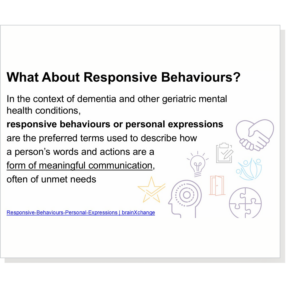
Kim Schryburt-Brown described dementia as changes in memory, thinking, perception, and mood, with responsive behaviours signaling unmet needs. Using Mr. Ng’s case, she showed how anosognosia leads him to believe he doesn’t need help. She emphasized connecting before tasks, reducing anxiety, cueing before touch, preparing the environment, supporting familiar routines, stopping when care feels threatening, and working with the care team and family for safe approaches.
June 17, 2025
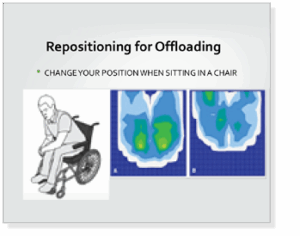
Danielle Heisler provided an overview of how pressure injuries develop, including early warning signs and risk areas like heels and sacrum. Justine Lowry shared practical strategies to prevent and manage skin tears through gentle handling and protective clothing. Whitney Kendrick emphasized offloading techniques using posture, cushions, and repositioning to relieve pressure and prevent injury.
TeleECHO Session
Expert Presentation Slides
Learning Snapshot
May 28, 2025
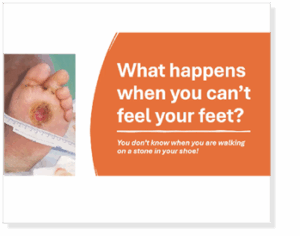
Kimberly LeBlanc emphasized the critical role of personal care providers in preventing and identifying skin damage, focusing on pressure injuries, skin tears, and moisture-associated skin damage. She shared practical strategies for skin assessment, repositioning, moisturizing, and reporting. Amanda Connolly followed with a real-world case study, demonstrating how consistent repositioning, barrier use, and family education supported healing in a high-risk client with ALS and compromised skin integrity
May 7, 2025
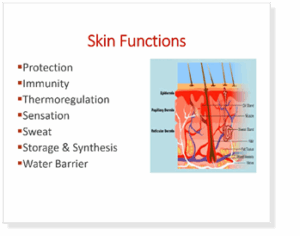
Maryanne D’Arpino emphasized the critical role that personal care providers play as the first line of defense in skin care. Dr. Gary Sibbald explained how the skin works, how to recognize lesions, and how to prevent problems such as wounds or tears. He shared practical tips that personal care providers can use when caring for people in their homes.
The Project ECHO Home and Community Care Learning Hub offers a variety of resources for healthcare providers delivering home- and community-based care. Through the hub, you can access:
The Palliative Care ECHO Project is supported by a financial contribution from Health Canada. The views expressed herein do not necessarily represent the views of Health Canada.
This post is also available in: French
Established in 1990, the Canadian Home Care Association (CHCA) is a national non-profit membership association dedicated to advancing excellence in home and community care.
National Office: 905-567-7373 | General Inquiries: chca@cdnhomecare.ca
2000 Argentia Road, Plaza 3, Suite 302. Mississauga, ON, L5N 1W1
This post is also available in: French
