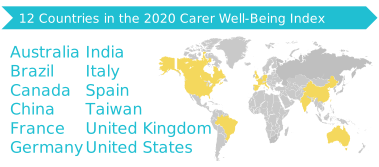
Drawing on the survey data from the 2020 Carer Well-being Index Report which included responses from over 9000 unpaid caregivers across 12 countries, a soon to be released paper reports on the similarities and differences in the stresses CEs faced during COVID-19. Stand-alone CE data from Canada is compared to the 11 other participating countries on responses relating to: time spent caring; sources of support; work impacts, and; emotional/mental, financial, and physical health.
In Canada, CEs on average spent more time caregiving during COVID than prior to the pandemic. Sixty-eight per cent reported that caregiving was more difficult, which is understood to be related to the reduction of formal and informal resources to support caregiving and general extracurricular activities and schooling. Thirty-four per cent reported more difficulty balancing their paid job and caring responsibilities. Seventy-one per cent of CEs felt their mental health has worsened.
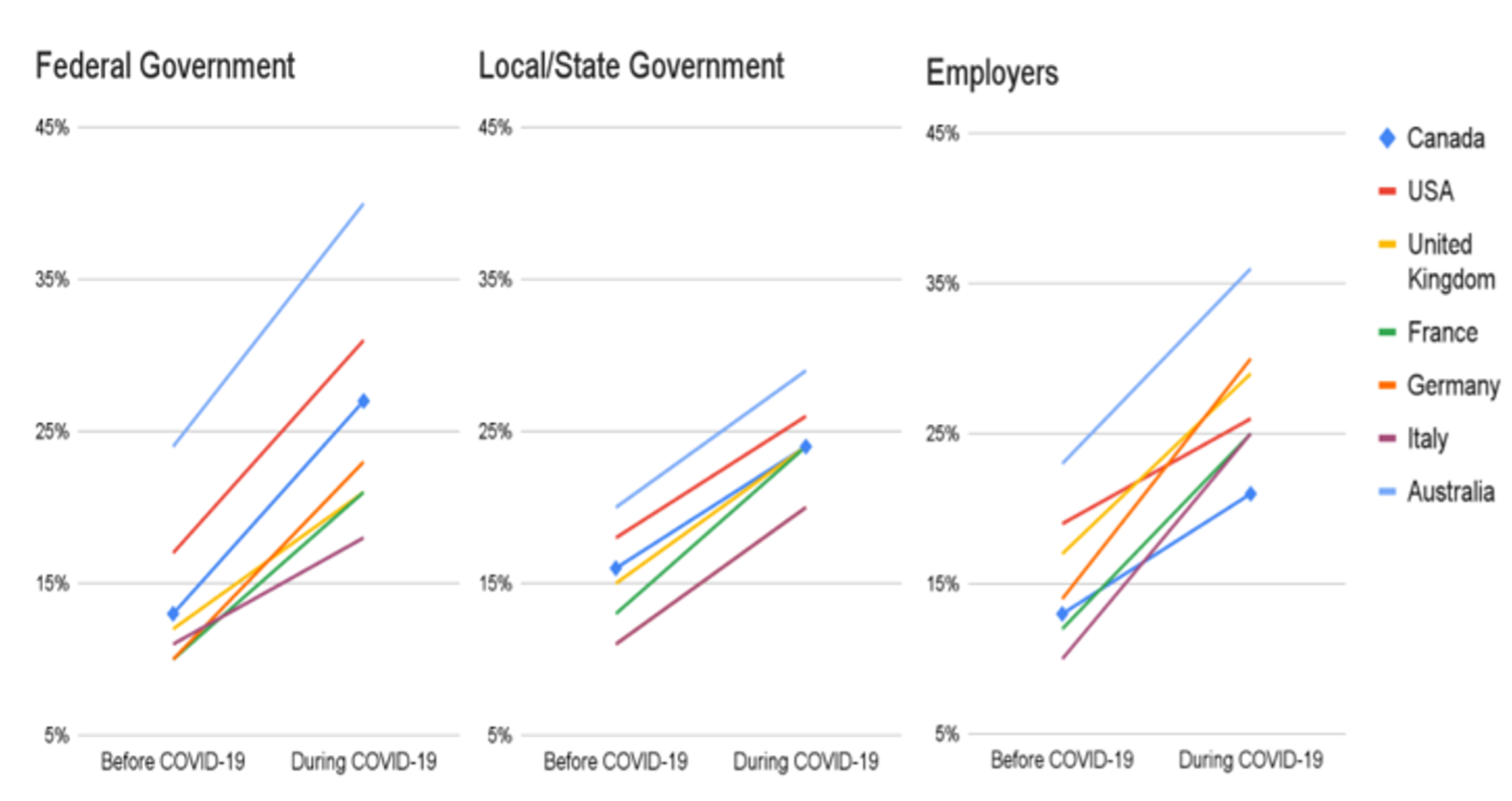
Prior to COVID-19, most CEs in Canada had never received support, financial and/or non-financial, from government or their employers. The only countries where over half of all CEs reported having received support, both financial and non-financial, at some point from either the government or their employers were Australia, China, and India.
During COVID-19, the percentage of CEs receiving support from governments and employers increased across all countries. Interestingly, Canada moved from 5th to last of the G7 countries and Australia for CEs receiving employer support during the pandemic.
Coupled with the findings suggesting that better employer support is linked to better CE mental health, these results serve as a call to action by the employer community to better support Canadian CEs.
The information and analysis in the upcoming paper is broader than this blog addresses, covering impacts on CE health, well-being, career, and effectiveness at work. Once published, a link to the paper will be posted.