A scoping methods approach, as outlined by Arksey and O’Malley[i], was used to provide the first synthesis of the literature with respect to the availability of Carer-Friendly Workplace Policies (CFWPs) internationally. Searches were performed in both the academic and grey literature, published between 1994 and 2014. A total of 701 articles were found. Seventy (n = 70) articles met all inclusion criteria and were included in this review. Of the 70 articles, the names and associated CFWPs of 88 unique workplaces were identified. Four main qualitative themes were identified.
Theme 1, Diversity, and Inclusiveness included defining ‘carer-employees’ (CEs); considering the employee’s position within the organization; looking at the gender norms around caregiving; and considering ethnic diversity and caregiving.
Theme 2, Motivation recognized the business case for implementing CFWPs, the influence of demography on the paid labour market; and employers’ sense of social responsibility to support their CEs.
Theme 3, Accessibility identified barriers to accessibility of CFWPs including stigma, the level of employee confidence in their employer’s ability to accommodate their needs, and the merits of formal mandated policies or case-by-case solutions.
Theme 4, Workplace Culture looked at the relationship to policies that offer CEs work-life balance and the extent to which CFWPs are embedded within the organizational structure or within HR policies.
The observations and examples provided in the paper provide numerous interesting insights into how countries and employers have approached the concept of working-carers. Eight recommendations for employers and government to consider to better support CEs are provided.
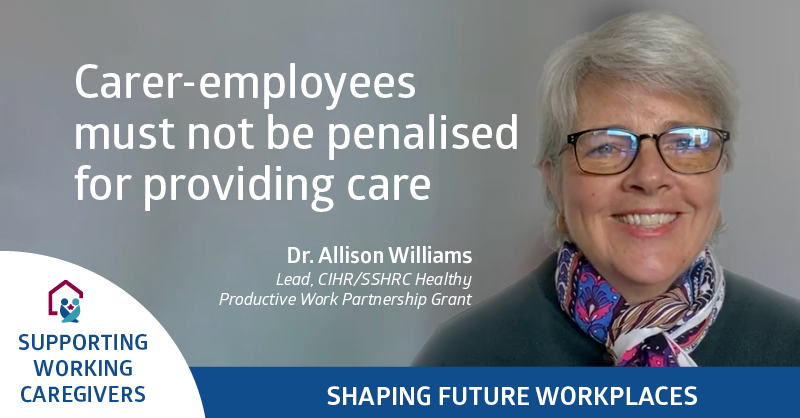
Given the ageing global demographics, the issue of integrating paid work with unpaid family caregiving will continue to be a serious concern for employers and the economy in Canada and internationally. Carer-employees must not be penalised for providing care by losing their jobs. Both men and women must be given equal opportunities to balance good quality work with their care‐giving responsibilities.[ii] Due to demographic changes, caregivers will continue to be employed in paid labour in later stages of their lives[iii], thus government and employer policies must reflect strategies to support carer-employees in their caregiving responsibilities while engaging in paid work.
Continued uptake of CFWPs is necessary to create workplace accommodations that foster work–family balance for carer employees while assisting employers to retain talented and skilled workforce.
Read the full published article